Rehabilitation
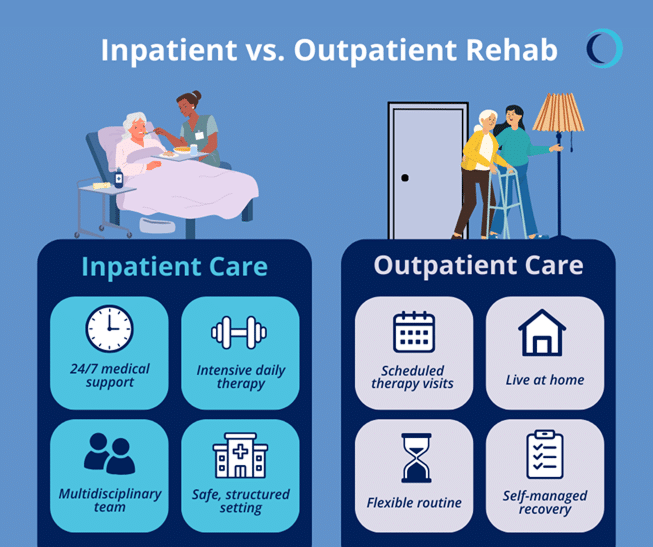
Inpatient vs. Outpatient Rehabilitation
Practical ways to stay cool, safe, and healthy during the hottest months of the year
September 1, 2025
When it comes to rehabilitation after an illness, injury, or surgery, patients and families often wonder which setting will provide the best support. Both inpatient and outpatient rehab are designed to help patients achieve their recovery goals, but the structure, intensity, and environment differ. Choosing the right path is about matching the setting to the patient’s individual needs.
Treatment Intensity and Structure
Inpatient Rehab
Inpatient programs are designed for patients who need a higher level of medical oversight along with their therapy. These programs provide access to around-the-clock nursing support, physician involvement, and a multidisciplinary team approach. Therapy is delivered daily and is often more intensive, making it well suited for patients with complex needs or those recovering from major health events.
Outpatient Rehab
Outpatient programs provide therapy in a more flexible setting for patients who are medically stable and able to live at home. Sessions are typically scheduled two to three times per week, allowing individuals to continue their normal routines while focusing on recovery. This approach supports long-term progress and helps patients integrate therapy into their everyday lives.
Rehab Outcomes and Recovery
Recovery looks different for every patient. Factors such as age, health status, diagnosis, and personal motivation all influence the speed and extent of progress. Our previous blog on how PT, OT, and SLP support wellness in the geriatric population how PT, OT, and SLP support wellness in the geriatric population explores this further, highlighting the role therapy disciplines play in supporting meaningful improvement.
In an inpatient setting, patients often benefit from the structure and intensity of daily therapy combined with continuous clinical oversight. In outpatient settings, patients benefit from consistency over time while building independence in the community. In both cases, the goal is to restore function, improve quality of life, and empower patients to live as fully as possible.
Choosing the Right Setting
The choice between inpatient and outpatient rehab is not about which option is better overall but about which is most appropriate for the individual.
Inpatient rehab is often recommended for patients who need more intensive therapy and close medical support. Outpatient rehab works well for patients who are ready to continue recovery while maintaining their home and community routines. Skilled nursing facilities also play an important role in rehabilitation, offering therapy alongside nursing care for patients who benefit from a structured setting but may not require the intensity of inpatient rehab. To learn more about how therapy in a skilled nursing facility supports recovery, read our blog here.
The best way to decide is through collaboration with the care team, who can provide guidance based on a patient’s medical needs and recovery goals.
Your Partner in Recovery
Pivot Rehab has had the privilege of helping facilitate many patient success stories across both inpatient and outpatient settings. Our teams are dedicated to providing the right level of therapy in the right environment, supporting patients as they work toward regaining strength, independence, and confidence. With a commitment to individualized care, Pivot continues to be a trusted partner for patients and families throughout their recovery journey.
Ready to take the next step? Schedule a tour of one of our skilled nursing facilities today and discover how Pivot Rehab can help you or your loved one achieve a successful recovery.
Other Blogs
News


Recent Blogs